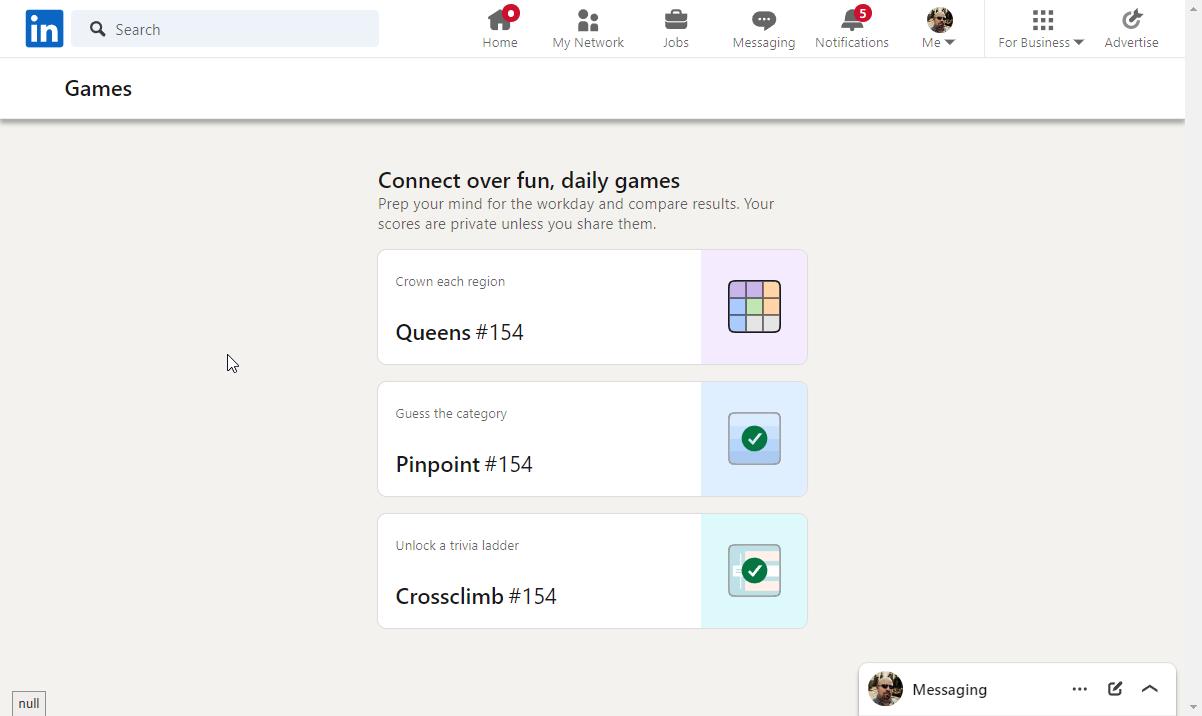
When LinkedIn added games in 2024, I was confused. Even as a daily Wordle player, I couldn’t see many people wanting to open their networking app to play games.
Even LinkedIn seemed to think it was a little weird, with a prominent link to “Why we have games” at the top of every game page. It said that “…one of the best ways to deepen and reignite relationships at work is simply by having fun together” and that you can “…compete with your connections, spark conversations, and break the ice” with people in your network.
Regardless, I tried Queens, Crossclimb, and Pinpoint and thought they were pretty good.
So I downloaded the LinkedIn app so they would be easier to play. Even though I use LinkedIn all the time, I had never bothered installing the app.
The next day, I told my wife about the games, and she downloaded the app so we could add them to the list of games we play over coffee every morning. She casually mentioned that she hadn’t logged into LinkedIn in years.
That’s when it hit me.
LinkedIn games aren’t really a way to build camaraderie or reignite relationships. They’re a way to drive app downloads and get people looking at LinkedIn every day.
And it worked.
A few months after launch, TechCrunch reported that “…since the start of July, new player engagement has grown about 20% week over week. LinkedIn has also noticed strong traction in users starting conversations after playing games.”
Two years later, LinkedIn is still adding games. There are eight now, with Patches arriving in March 2026 and Wend in June, and LinkedIn says millions of members play every day and 86% come back to play again the next day. Companies don’t keep building something that isn’t paying off.
Anecdotally, I see it too. The easiest way to get to the daily games is through your notifications in the LinkedIn app, and there have been plenty of times I found myself reading posts from friends and colleagues before opening Crossclimb or Pinpoint for the day.
That’s the part worth borrowing for your own marketing.
You probably don’t have the budget to develop your own games for your website (although if you do, give it a shot).
But you probably do have other things that could pull people to your website. You’ve probably even thought about what they are, but never made them a priority.
So finish that white paper, put it behind an email gate, and run a small paid social campaign with a subversive ad behind it. Make it clever and bright and interesting, not a boring 40-page PDF.
Start that podcast where you interview your most amazing employees or customers. Don’t make it about your business. Don’t have your CEO be the host. Find someone who works for you with a great voice or a great sense of humor, and make it entertaining first and a marketing vehicle second.
Or take a page from radio and feature customers (or customer creations) “on air.” You might not be able to take the 15th caller, but you probably have a Facebook account for your business. If you find the right people, they will love being featured and will drive other people to your socials for you.
It’s easy to fall into marketing ruts. The same social media posts, the same blog posts, the same Google Ads. Instead, pull a LinkedIn: do something so unexpected that you need to add a link telling your audience why you’re doing it. And if you need a bit of help getting it done, contact us.